
Tornado Preparedness Training
A scenario-based learning experience that builds fast, safer decision-making during a tornado warning.
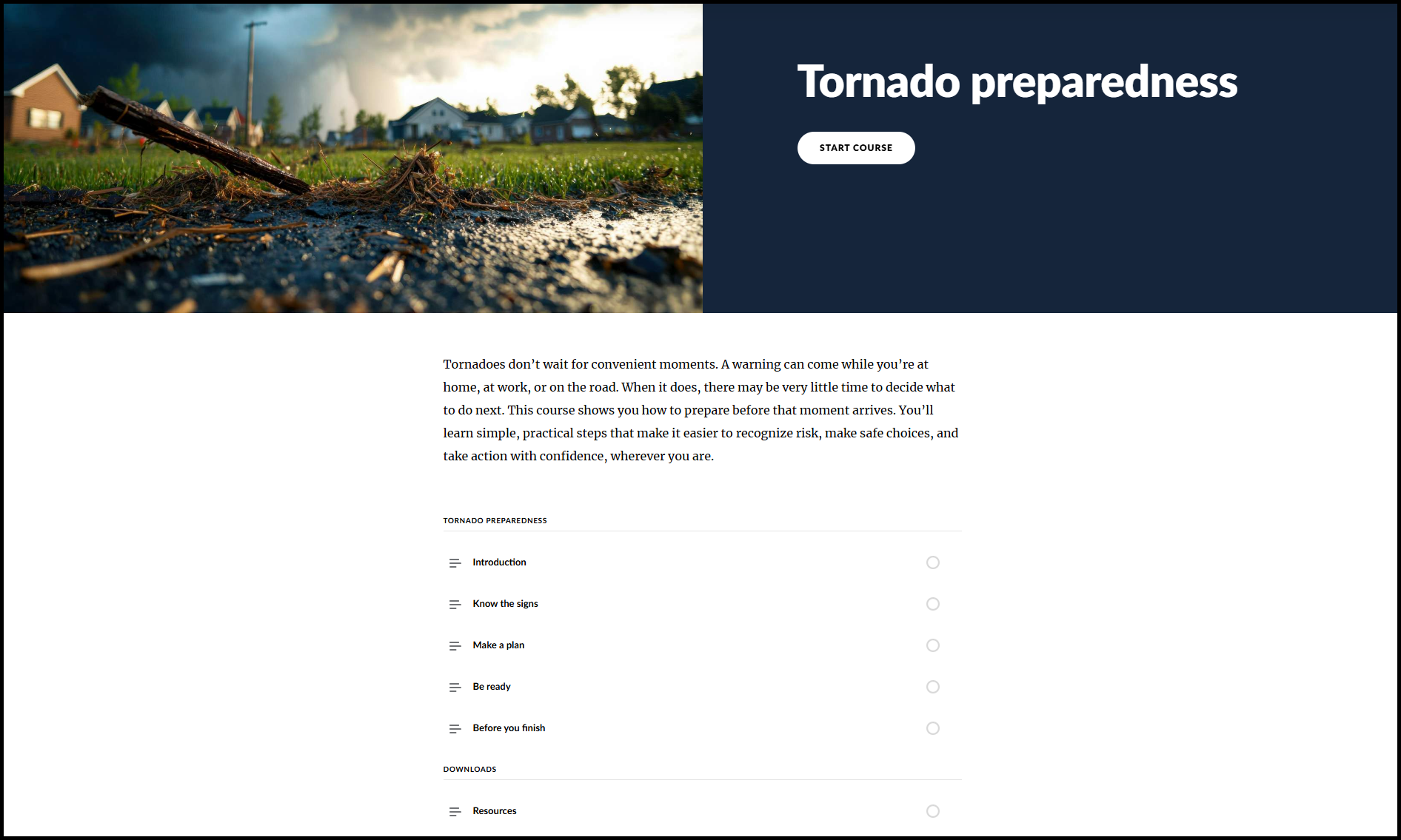
Audience:
General public
Format:
Rise course with Storyline scenarios, Vyond video, and fillable job aids
Tools:
Articulate, Rise, Storyline, Vyond, Photoshop, Word, Acrobat, Vine
Role:
Instructional Designer, Developer, Writer, Visual Designer
The Problem
When a tornado warning is issued, people may have only seconds to act, but they may hesitate because they’re unsure where to go or what to do. This project focuses on building quick, confident decision-making through realistic scenarios.
Emergency preparedness training is often static. Learners are told what to do but rarely practice making decisions. This creates a gap between knowing and acting under pressure.
Learner Needs:
Need a safe way to practice
May feel anxious or overwhelmed during severe weather
Need clear, usable guidance
The Solution
I designed an interactive experience that places learners inside a developing tornado scenario where they must make decisions under pressure.
Learners don’t just read. They:
Make decisions in realistic situations
Experience immediate consequences
Apply strategies to real life
Design approach
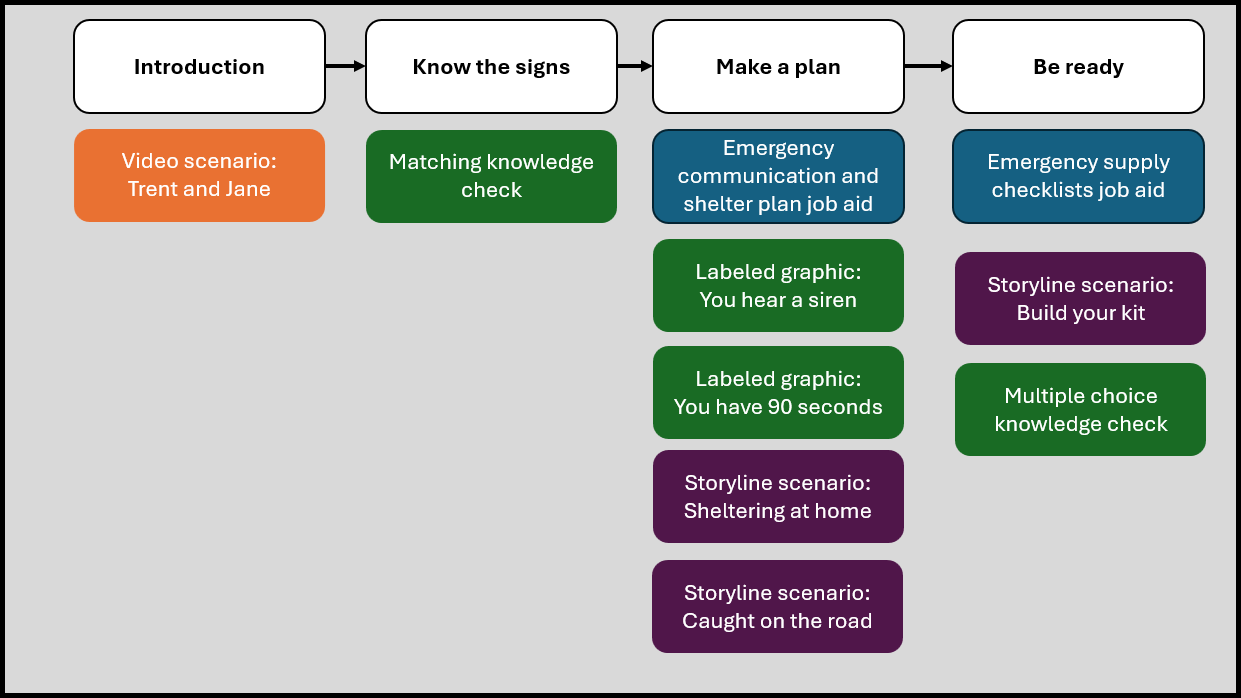
This experience focuses on applied learning through realistic scenarios, decision-making, and feedback, guiding learners from awareness to action.
Scenario-Based Learning
Learners engage in realistic situations that require decision-making, rather than passively reading information.
Consequence-Driven Feedback
Each decision leads to immediate, meaningful outcomes that reinforce safe and unsafe behaviors.
Applied Practice
Learners apply skills by identifying shelter, preparing supplies, and building a simple plan in context.
Accessible, Trauma-informed Design
Plain language and a calm tone support a wide range of learners, including those who may feel anxious during severe weather. Full audio transcripts provided to support accessibility and alternative learning preferences.
Embedded Assessment
Understanding is evaluated through decision-making and feedback rather than traditional knowledge checks.
Key Interactions
Learners make decisions under pressure through a series of interactive scenarios:
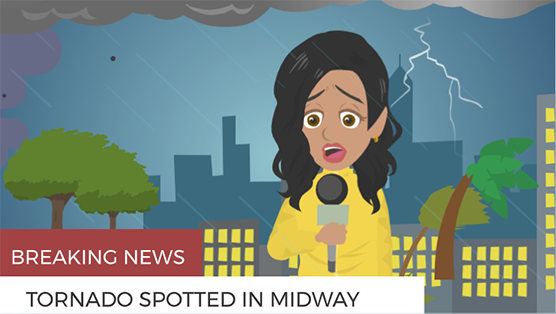
Vyond scenario intro sets context and urgency
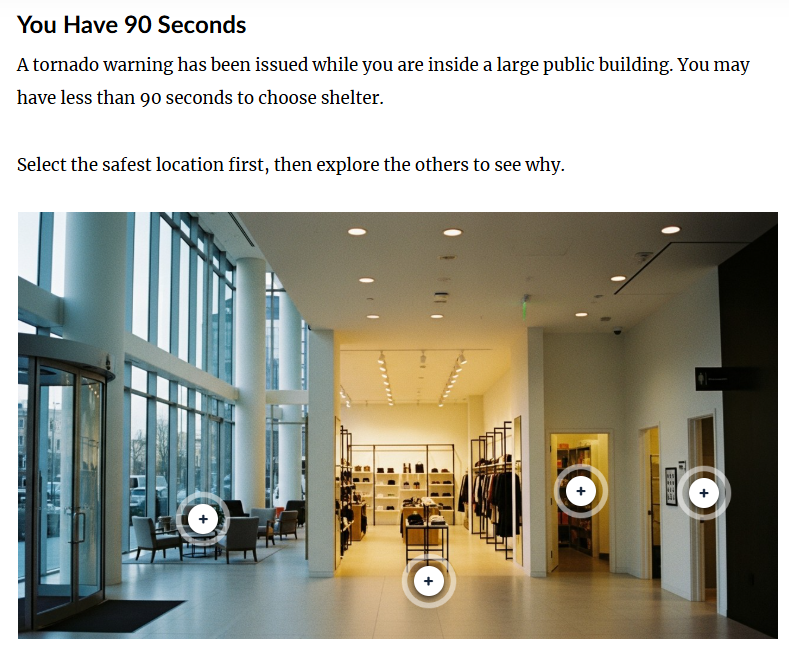
Timed decision interaction reinforces fast, safe choices
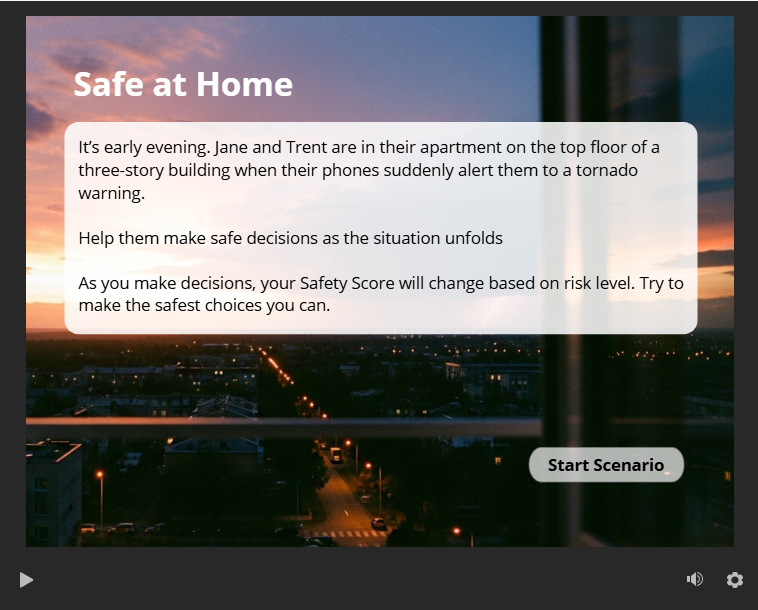
Scenario-based interaction reinforces safe decision-making in a low-risk environment
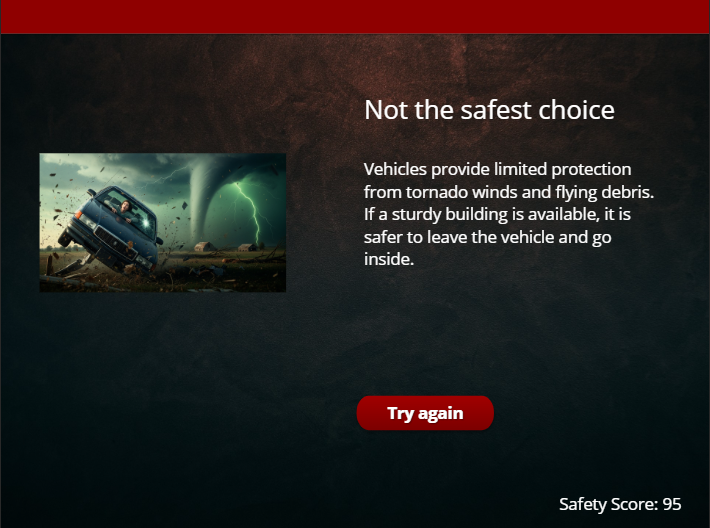
Immediate feedback reinforces consequences of risky decisions
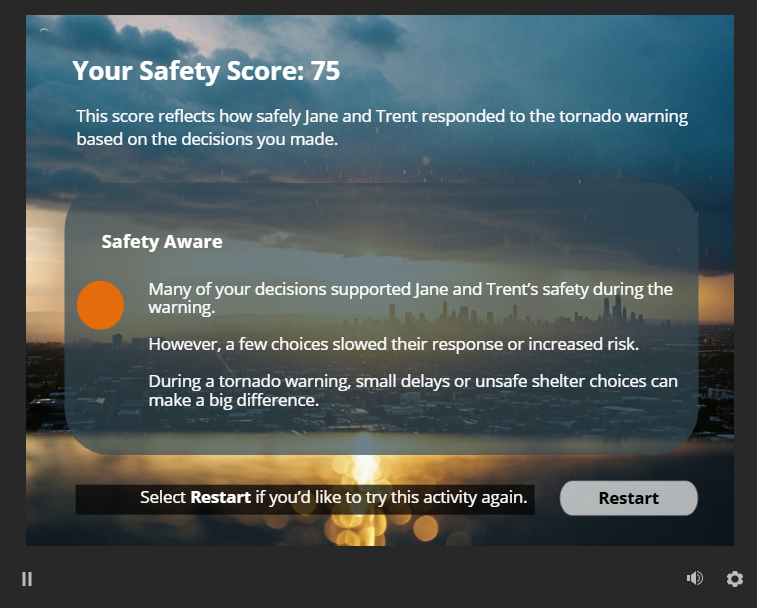
Personalized safety score reflects learner decisions
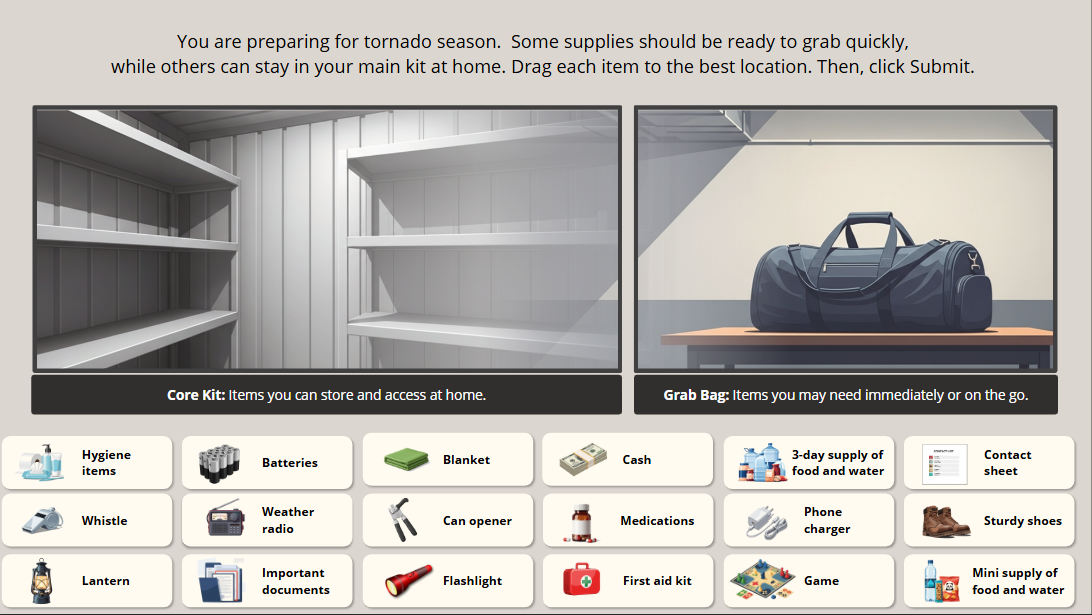
Emergency kit activity connects learning to real-world action
Planning Tools (Job Aids)
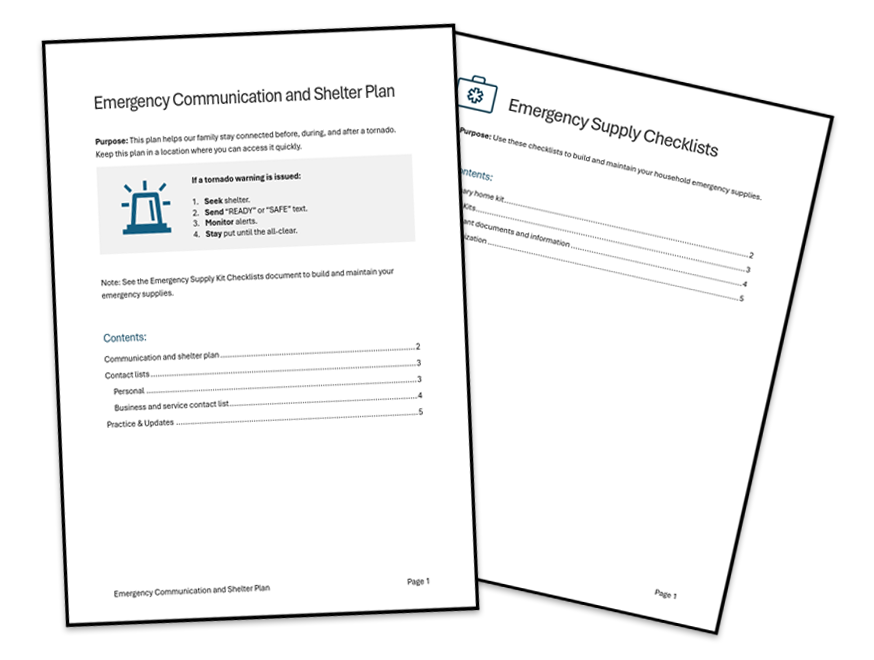
To support real-world application, I designed two fillable tools:
Emergency Plan Worksheet: Helps learners map communication and shelter plans
Preparedness Kit Checklist: Helps learners organize emergency supplies
Both are interactive PDFs learners can personalize and use outside the course.
My Role
I led the end-to-end design and development of this program, including:
Structuring the learning experience
Writing scenarios and dialogue
Designing interactive decision points
Developing in Rise and Storyline
Creating supporting job aids
Reflection
Early versions included a general “build a kit” activity, but it felt too subjective. I shifted to scenario-based decisions to better reflect real-world pressure.
I explored fully branching scenarios, but failure paths limited the experience. Instead, I used consequence-driven feedback with a scoring system that reinforces better choices without stopping progress.
I removed humor from the opening to better match the emotional tone and support learner focus.
While the Rise course is fully mobile-friendly, embedded Storyline interactions are best experienced on desktop. This reflects a tradeoff between creating more complex, scenario-based interactions and maintaining full mobile compatibility.
Next step: adapt the experience for mobile.
Select the link below to view the next project.