
Operations Training Simulations
Simulation-based training designed to build accuracy and confidence in complex system workflows.
This project focused on creating scalable, system-based training that multiple designers could build and maintain consistently.
Confidentiality Note
Due to confidentiality requirements, specific organization details, program names, and course materials are not shown. Project details focus on design approach, process, and outcomes.

Audience:
Operations call center agents
Format:
Simulation-based eLearning and system practice activities
Tools:
Adobe Captivate, Photoshop, enterprise LMS
Role:
Lead Specialty Designer
The Problem
Agents were expected to perform complex tasks in internal systems requiring both speed and accuracy.
However:
Learners had limited access to live or test systems for practice
Simulation design varied across designers, creating inconsistency
System-based training was time-intensive and difficult to scale
This created a gap between training and real-world performance.
How Simulations Were Built
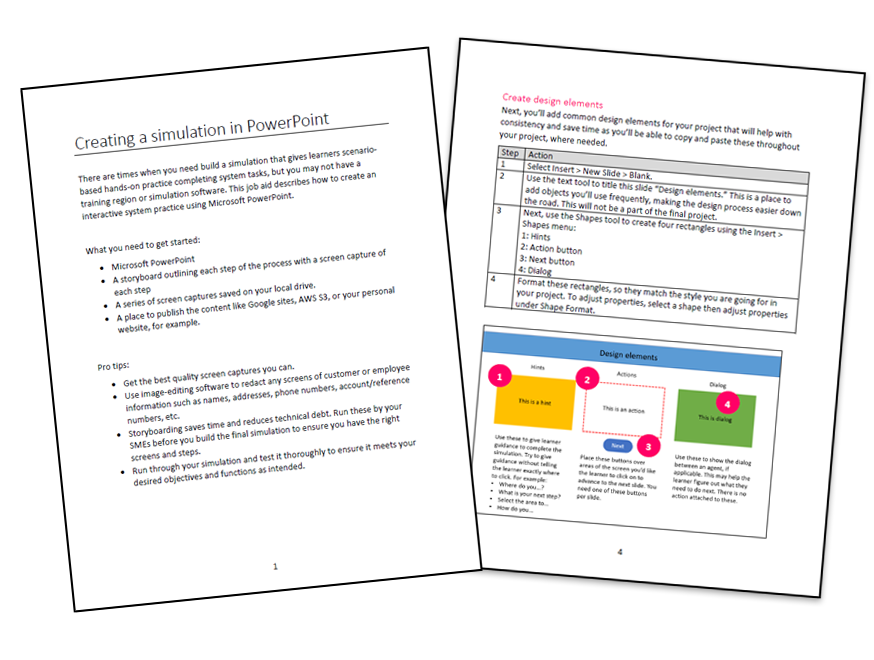
To adapt to system and platform constraints, simulations were developed using PowerPoint as an alternative to traditional tools.
This approach allowed for:
Faster development using familiar tools
Easier updates as systems evolved
Scalable contribution across multiple designers
The Solution
I led simulation design and established a scalable system for building and delivering system-based training across the project.
I developed a scalable simulation approach by:
Standardizing how system interactions were designed and built
Creating reusable templates and assets
Supporting and mentoring designers across the team
I also designed scenario-based simulations to reflect real-world job tasks and decision-making.
Simulation Design System
Design approach
This project uses simulation-based learning to build procedural fluency in a safe, realistic environment.
Structured Simulation Design
Created templates, storyboards, and structured workflows for system practice activities, allowing multiple designers to build simulations efficiently and consistently.
System-Based Training Without System Access
Developed high-quality, redacted screen captures and system-based visuals to replicate real workflows in a controlled training environment.
Reusable Asset Library
Produced 200+ screen assets and 60+ custom graphics to support consistent, reusable simulations.
Simulation Design Under Constraints
When simulation tools and system access were limited, I developed an alternative approach using PowerPoint to create interactive system practice activities.
This approach allowed the team to:
Build simulations using familiar tools
Create easily maintainable and updateable content
Deliver consistent system-based practice despite changing systems
To support this, I created detailed job aids and templates that standardized how simulations were built across the team.
Scenario-Based Simulations
Designed and developed scenario based Captivate simulations with:
Personalized elements (learner name variables)
Gated progression to ensure completion
Realistic decision-making interactions
Team Enablement and Scalable Development
As the sole Specialty resource, I enabled other designers to build high-quality simulations by providing:
Step-by-step job aids and templates
Structured storyboarding approaches
1:1 coaching and feedback
This allowed multiple designers to contribute to simulation development efficiently, even without prior experience in simulation tools.
Quality and Consistency
Conducted functionality reviews to ensure accuracy and zero defects before pilot.
Simulation Features
Key features that support system-based skill development:
System Practice Simulations
Learners complete realistic system-based tasks using guided simulations that mirror real workflows.
Scenario-Based Conversations
Simulations include decision-making interactions that reflect real customer scenarios in fraud operations.
Reusable Simulation System Design
Templates, assets, and job aids support consistent simulation development across the team.
Personalized Learning Experience
Learner name variables and structured progression increase engagement and immersion.
Gated Progression
Learners must complete key activities before advancing, reinforcing accountability and skill development.
My Role
Lead Specialty designer and simulation consultant.
Led simulation design strategy and standards
Built templates, assets, and reusable components
Mentored and supported designers across the project
Created scenario-based simulations and system activities
Ensured quality through review and testing processes
Outcome
Enabled scalable development of system-based simulations across multiple designers
Reduced development time through reusable templates, workflows, and alternative development approaches
Improved consistency and quality across simulation-based training materials
Eliminated defects prior to pilot through structured review and testing
Increased realism of training despite lack of system access
Supported faster turnaround of simulation deliverables through team enablement and shared resources
Enabled simulation development using accessible tools, allowing the team to build and update training despite system and platform limitations
“Your ability to prepare high-quality assets and transfer knowledge allowed us to turn work around faster and produce better content.”
Reflection
This project reinforced the importance of designing scalable systems, not just individual learning experiences.
Creating reusable assets, templates, and guidance improved both efficiency and consistency across a distributed design team.
It also highlighted how realistic simulations can effectively prepare learners for system-based work, even without direct access to live environments.
Select the link below to view the next project.